
Identity fraud
Forged or photocopied documents slip through manual checks more often than teams would like.
Identity verification
Verify identity using consent-based, offline Aadhaar credentials — no CIDR connectivity, no storing Aadhaar numbers, fully aligned with UIDAI's OVSE framework.
Registered & recognized
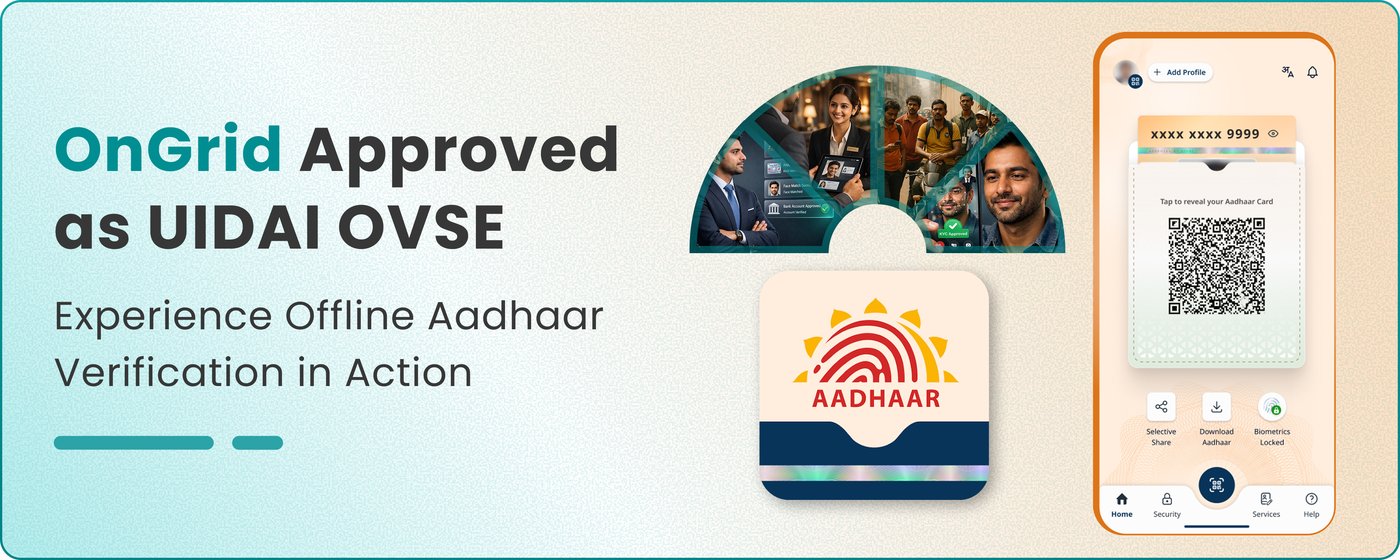
Organizations registered as OVSEs within 3 months of rollout
Sectors adopting offline Aadhaar verification, from fintech to law enforcement
Assam Police registers as an OVSE — among the first police forces to do so
Source: UIDAI; figures on OVSE registration adoption, mid-2026
What is the Aadhaar Verification API
The Aadhaar Verification API lets businesses confirm a person's identity using Aadhaar data — without connecting to UIDAI's Central Identities Data Repository (CIDR), and without storing a resident's Aadhaar number. It's built on UIDAI's Offline Verification Seeking Entity (OVSE) framework, formalized under the Aadhaar (Authentication and Offline Verification) Regulations, 2021 (as amended in 2025).
Instead of a real-time database check, the resident (Aadhaar Number Holder) shares a digitally signed, tamper-evident credential directly with the verifier — and the API confirms it's genuine.
The problem
Identity fraud, document forgery, and slow manual KYC checks continue to cost Indian businesses time, money, and trust. As digital onboarding becomes the default across fintech, insurance, hospitality, and government services, organizations need a way to verify identity that is fast, privacy-preserving, and compliant with UIDAI regulations.
Forged or photocopied documents slip through manual checks more often than teams would like.
Physical checks and repeated OTP or biometric steps stretch onboarding to days.
Continuous online CIDR connectivity isn't always practical — or desired — for every use case.
Regulations are tightening around how Aadhaar data can be requested, shared, and stored.
The solution
UIDAI's offline verification model shifts verification away from real-time database checks and toward resident-controlled, consent-based data sharing. The Aadhaar Verification API, used within the OVSE framework, lets your business:
Features & benefits
Verification happens directly against a signed credential, not a real-time database call.
Nothing sensitive needs to be stored by default; any retained data must be masked or redacted per UIDAI guidelines.
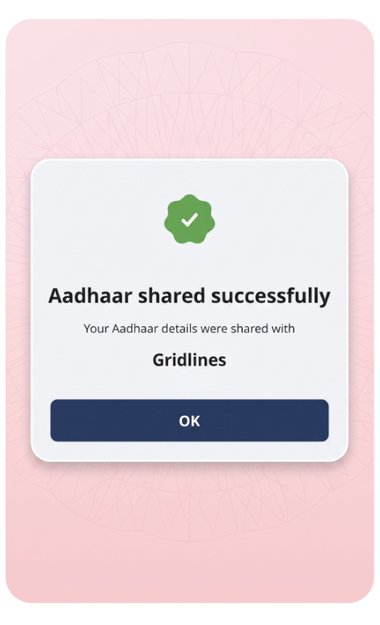
An OVSE cannot access or verify Aadhaar data without the resident's explicit, informed consent — approved at each request.
Share only what's needed — e.g. just a photo and age band — rather than full demographic details.
QR code scans, app-to-app credential sharing, and web-to-app intents, depending on your integration.
Lighter than online authentication routes, since the Aadhaar number itself is never transmitted or stored.
Industries
UIDAI reported nearly 100 organizations across these sectors registered as OVSEs within three months of the offline verification system's rollout — including Assam Police, among the first police forces to register, in mid-2026.
Use cases
Insurance
Verify a policyholder's identity at the point of a cashless hospital claim, without repeated OTP or biometric dependency.
Workforce
Confirm candidate identity during onboarding or gig-worker activation.
Hospitality
Replace manual photocopying of ID documents with a consent-based digital check.
Government & Law Enforcement
Detect fraudulent or photocopied Aadhaar documents, as seen in recent state-level police deployments.
Fintech & NBFC
Support KYC workflows where continuous online CIDR connectivity isn't practical or desired.
How it works
01
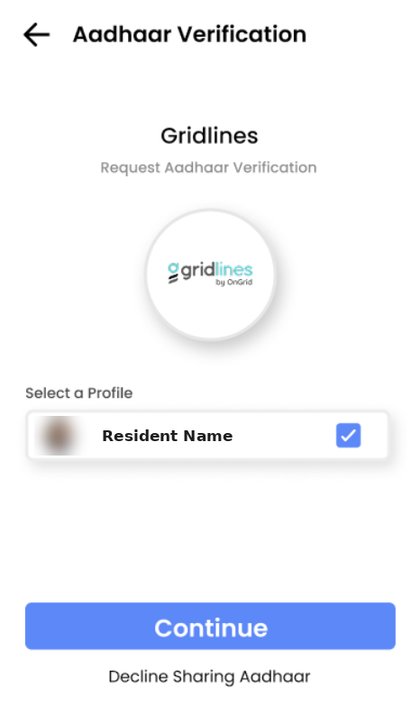
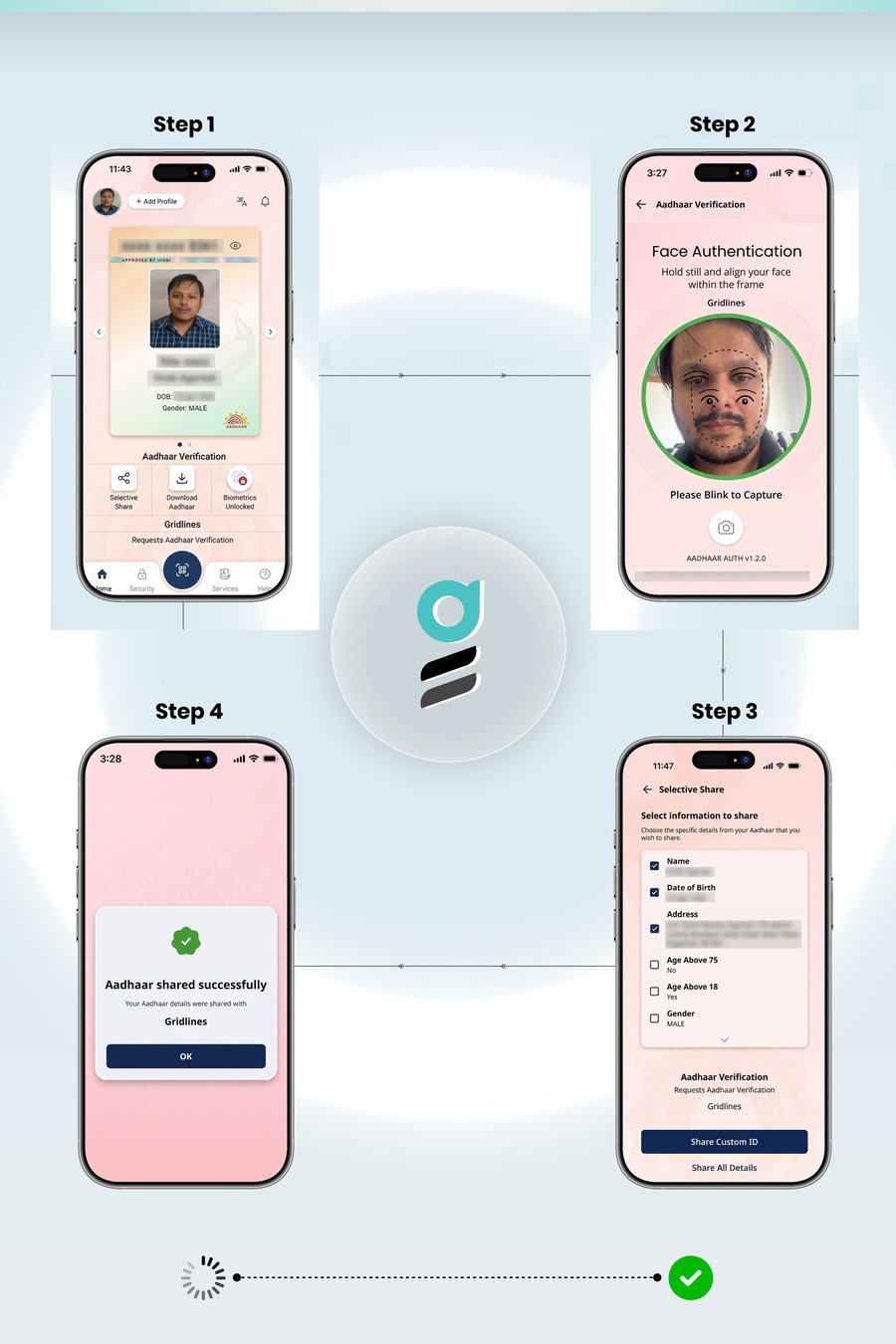
The Aadhaar Number Holder generates a digitally signed Verifiable Credential, or offline XML/QR output, through the official Aadhaar App — not the verifying entity.
02
The Verification API checks the digital signature to confirm the data hasn't been tampered with and genuinely originated from UIDAI.
03
Under UIDAI's "show, share, and verify" model, residents can share a masked or partial credential rather than full demographic details.
04
The Aadhaar number itself isn't required, and any retained data must be masked or redacted per UIDAI guidelines.
Integration
Full endpoint reference, error codes, and response schemas to follow — this covers the supported credential-sharing formats.
Compliance
✓Formal OVSE registration is required. Performing offline Aadhaar verification without registering with UIDAI isn't permitted, regardless of technical capability.
✓Consent workflows must be auditable. UIDAI requires consent to be explicit and demonstrable, not implied.
✓Data minimization applies. Request only the attributes necessary for your specific use case, not full demographic profiles by default.
✓Storage rules are strict. Any retained Aadhaar-derived data must be masked or redacted according to UIDAI's specifications.
✓Regulations are still evolving. The 2025 amendments and the January 2026 updated Aadhaar App both changed how offline verification integrations work — verify current requirements against UIDAI's official guidance before going live.
Why Gridlines
One platform for OVSE-based Aadhaar verification, not another vendor to manage.
Alongside your broader identity stack — DigiLocker, eSign, KYB checks — instead of managing separate vendor integrations, with consent and audit trail built into the flow by default.
Book a Demo01
OVSE verification alongside DigiLocker, eSign, and KYB checks on one platform.
02
Consent and evidence are built into the flow, not bolted on after the fact.
03
Change what's requested and shared without an engineering sprint.
04
QR, XML, and app-to-app credential formats from a single integration point.
FAQs
An Offline Verification Seeking Entity (OVSE) is any organization formally registered with UIDAI to perform offline Aadhaar verification for a lawful purpose. Registration isn't automatic — entities must apply to UIDAI with the prescribed documentation before they can legally verify Aadhaar credentials offline.
Get started
Whether you're building KYC into a fintech product, streamlining insurance claims, or verifying a workforce at scale, we can help you register correctly and integrate fast.