
BFSI
-

When Seeing Isn’t Believing: The Rising Risk of AI Generated Fraud
A screenshot of a cheque circulated on social media recently. Rs 69,000. Clean handwriting, proper formatting, the kind of document you’d glance at and move on from without a second thought. Except it was entirely AI-generated. No bank issued it. No one signed it. No transaction ever took place. It was generated in seconds using…
-
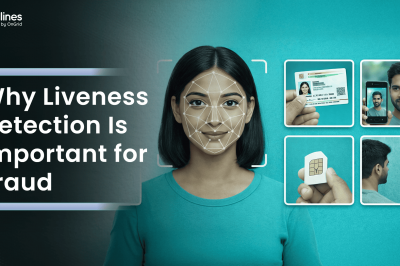
Why Liveness Detection Is Important for Fraud Prevention
There was a time when identity verification felt enough. If the document looked real and the face matched, the job was done. Most systems were built around that assumption—verify the ID, match the photo, move ahead. That assumption doesn’t hold anymore. Fraud hasn’t disappeared. It has evolved. Today, attackers don’t always fake identities. They use…
-
7 KYC Challenges in Lending Apps
Most lending teams don’t think of KYC as a growth problem. They think of it as compliance. A necessary checkpoint. Something that needs to be “done right” before anything else moves. But if you look closely, KYC is where growth is either unlocked—or quietly blocked. Every delay in verification is a lost application.Every friction point…
-
User Authentication: Everything You Need to Know
Every digital journey begins with a simple question: are you really who you say you are? It doesn’t matter whether someone is opening a bank account, logging into an app, placing an order, or accessing sensitive data—the system needs to know it’s dealing with the right person. That single moment of validation is where user…
-

13 Steps to Build a Zero-Friction KYC Journey
Most onboarding journeys don’t fail because users don’t want to complete KYC. They fail because something feels harder than it should. A form that takes too long. A document upload that doesn’t work the first time. A verification step that feels unclear. None of these are deal-breakers individually—but together, they quietly push users away. That’s…
-
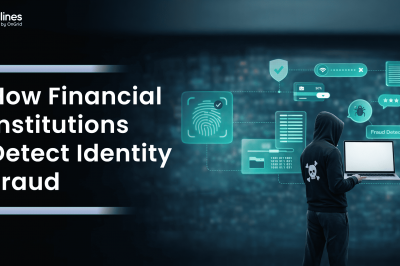
How Financial Institutions Detect Identity Fraud
Every day, somewhere in India, a loan gets approved for someone who doesn’t exist. Not in the way you’d imagine — no elaborate heist, no stolen briefcase. Just a carefully assembled set of documents: a PAN card from one person, an Aadhaar with a tweaked photo, a bank statement edited in a free PDF tool…
-
9 Reasons Your KYC Process Is Causing Drop-Offs you know
You don’t usually get direct feedback on a broken KYC flow. No one writes in saying, “Your verification steps are too long.”No one complains that your document upload failed twice. They just drop off. And slowly, quietly, your funnel starts showing signs of high onboarding abandonment—even when everything above it (ads, traffic, sign-ups) seems to…
-

What 1 Billion+ Verifications Taught Us About User Behavior
If you spend enough time looking at user data, a strange thing happens. You stop seeing “users.” You start seeing patterns. Not in a cold, analytical way—but in a way that feels oddly human. Predictable in places, chaotic in others. Consistent until it suddenly isn’t. Now imagine observing this not across thousands or even millions…
-

KYC Best Practices for Efficient Onboarding & Risk Control
Recently, a major financial irregularity involving nearly ₹500 crore surfaced after routine reconciliation exposed forged instruments and weak internal controls. The incident wasn’t a cyberattack. It was a failure of layered verification and monitoring. Cases like this remind us of a simple truth: when identity checks are shallow and oversight is fragmented, risk compounds quietly.…
-

Fraud Claims in Insurance: Types & How to Prevent Them
Insurance is built on a simple promise. When something goes wrong, the insurer steps in. A hospital bill is settled. A damaged car is repaired. A family receives financial support after loss. But between that promise and the payout lies a fragile line: trust. Fraud claims test that trust every single day. For insurers, fraud…
Recent Posts
- Loan Recovery Technology: Using Digital Intelligence to Improve Borrower Contactability

- Digital Skip Tracing for Loan Recovery: How Lenders Can Find Hard-to-Reach Borrowers

- Aadhaar App Verification: How OVSE Enables Secure Digital Identity Verification

- Aadhaar App Verification: How OVSE Enables Secure Digital Identity Verification

- CKYC vs Aadhaar eKYC vs Aadhaar App: Choosing the Right Digital KYC Journey

Categories
- APIs 66
- BFSI 87
- Digital Onboarding 97
- Gridlines 50
- Industry Insights 77
- KYB 12
- MSME 10
- Uncategorized 1
Tags
#GridlinesAPI address verification api AI in Fraud Detection aml API Integration APIIntegration Background check Business Verification digital KYC Digital Onboarding eKYC Employment Verification financial services fintech Fintech Solutions Fraud Prevention gridlines Gridlines API identity verification insurance kyc KYC API Last-Mile Delivery Security lending Prevent Delivery Fraud RC verification TrustEstablishment underwriting Verification video kyc