
BFSI
-
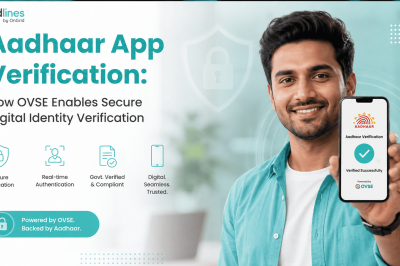
Aadhaar App Verification: How OVSE Enables Secure Digital Identity Verification
Digital identity verification is moving toward journeys where customers can participate directly in sharing and confirming their identity. For banks, NBFCs, fintechs and other regulated businesses, this creates an opportunity to make onboarding more convenient while maintaining stronger verification controls. One such approach is Aadhaar App verification through an Online Verification Service Entity (OVSE) journey.…
-
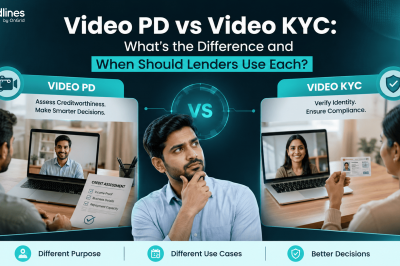
Video PD vs Video KYC: What’s the Difference and When Should Lenders Use Each?
Video KYC and Video Personal Discussion (Video PD) both use video to connect financial institutions with customers remotely. That similarity can make the two appear interchangeable. They are not. The two serve different purposes in the financial services lifecycle. Video KYC is primarily about establishing and verifying customer identity as part of the KYC process.…
-
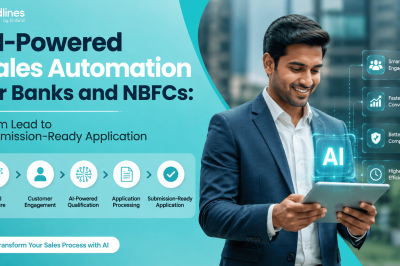
AI-Powered Sales Automation for Banks and NBFCs: From Lead to Submission-Ready Application
For banks and NBFCs, sales technology has traditionally been built around individual stages of the customer journey. A CRM manages leads. A loan origination system manages applications. An LMS may support learning and training, while other platforms handle communication, documents, incentives and internal workflows. Each system may perform its intended function effectively. The challenge begins…
-
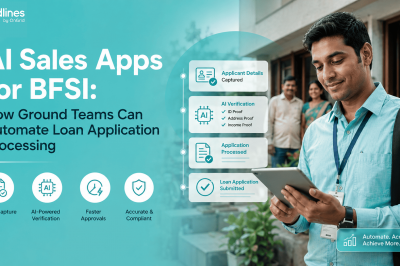
AI Sales App for BFSI: How Ground Teams Can Automate Loan Application Processing
Digital transformation has significantly changed how banks and NBFCs process loans. Customer information can be captured digitally, credit decisions can be supported by technology, and loan origination systems can automate several backend processes. Yet, there is one part of the lending journey that remains heavily dependent on manual execution: the ground sales team. Relationship managers,…
-
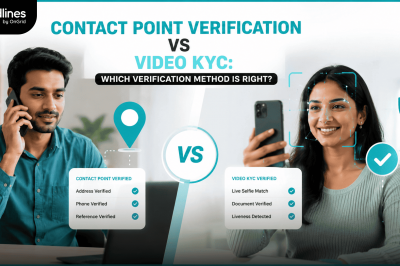
Contact Point Verification vs Video KYC: Which Verification Method Is Right?
Customer verification is no longer limited to checking an identity document. For businesses operating in lending, fintech, insurance, banking, marketplaces and other digital-first sectors, the real challenge is establishing that the customer is genuine, reachable and eligible without making the onboarding process unnecessarily complicated. This is where different verification methods come into play. Contact Point…
-

The New Face of Fraud: Deepfakes and the Future of Video KYC
In 2023, deepfake fraud in Video KYC emerged as one of the biggest threats facing financial institutions. Deepfake attacks against fintechs jumped more than 700%, while identity fraud losses exceeded $43 billion globally. As cybercriminals use AI to manipulate faces, voices, and identities, simply meeting regulatory requirements is no longer enough. For banks and other…
-
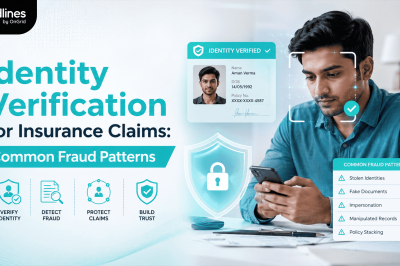
Identity Verification for Insurance Claims: Common Fraud Patterns
Insurance fraud rarely depends on one obviously fake document. In many cases, the information submitted during a claim may look perfectly reasonable. The claimant may have a genuine identity document, a valid policy and legitimate supporting paperwork. The problem only becomes visible when different pieces of information are compared with each other. A name doesn’t…
-

How to Build a Fraud Detection Stack for Indian Businesses
Every business wants to stop fraud. Yet, many approach it the wrong way. The typical response to rising fraud is to add another tool—a document verification solution, a device fingerprinting platform, an OTP check, or a credit bureau integration. Over time, the fraud team ends up with multiple disconnected systems, each solving one problem while…
-

How Verification APIs Reduce Fraud in Insurance Claims
Insurance is built on trust. Every policy issued and every claim settled is based on the assumption that the information provided by the customer is genuine. However, as the industry has embraced digital-first experiences, fraudsters have become equally sophisticated, exploiting gaps in identity verification, documentation, and claims processing. According to industry estimates, insurance fraud costs…
-

eSign API Explained: How Digital Signing Works in India
Somewhere in your onboarding flow right now, there’s a step that doesn’t belong. A user has completed everything digitally — submitted their details, cleared KYC, been approved — and then you’re asking them to print something. Or sign a PDF image. Or show up somewhere in person. That step is costing you conversions, operations bandwidth,…
Recent Posts
- Loan Recovery Technology: Using Digital Intelligence to Improve Borrower Contactability

- Digital Skip Tracing for Loan Recovery: How Lenders Can Find Hard-to-Reach Borrowers

- Aadhaar App Verification: How OVSE Enables Secure Digital Identity Verification

- Aadhaar App Verification: How OVSE Enables Secure Digital Identity Verification

- CKYC vs Aadhaar eKYC vs Aadhaar App: Choosing the Right Digital KYC Journey

Categories
- APIs 66
- BFSI 87
- Digital Onboarding 97
- Gridlines 50
- Industry Insights 77
- KYB 12
- MSME 10
- Uncategorized 1
Tags
#GridlinesAPI address verification api AI in Fraud Detection aml API Integration APIIntegration Background check Business Verification digital KYC Digital Onboarding eKYC Employment Verification financial services fintech Fintech Solutions Fraud Prevention gridlines Gridlines API identity verification insurance kyc KYC API Last-Mile Delivery Security lending Prevent Delivery Fraud RC verification TrustEstablishment underwriting Verification video kyc