
Digital Onboarding
-
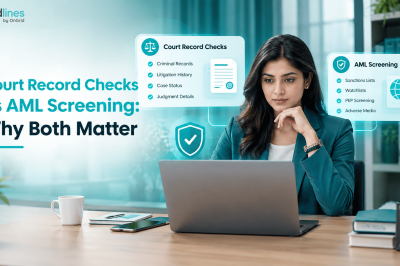
Court Record Checks vs AML Screening: Why Both Matter
When organisations assess the risk associated with a person, customer, employee, partner or business relationship, one check rarely tells the complete story. A criminal or court record can reveal legal proceedings, while AML screening can identify exposure to sanctions, politically exposed persons and other financial-crime risks. This is why understanding court record checks vs AML…
-
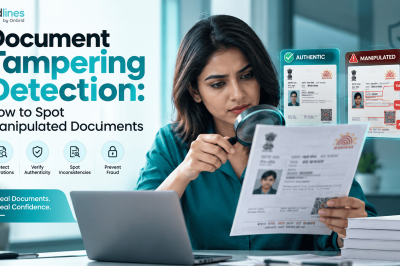
Document Tampering Detection: How to Spot Manipulated Documents
Document tampering detection is the process of checking whether a document was changed after it was issued. It combines visual inspection, file forensics, data cross-checks and automated models to catch edited numbers, swapped photos, altered dates and rebuilt templates. Anyone who has reviewed loan files knows the uncomfortable part. The tampered document usually looks fine.…
-

How to Build a Risk-Based Customer Onboarding Flow Using Verification APIs
Customer onboarding has changed. For banks, NBFCs, lenders and fintech companies, onboarding is no longer simply about collecting a PAN, Aadhaar or other identity document and checking whether the details match. Every new customer brings a different level of risk — and treating every customer the same can create problems at both ends. A low-risk…
-
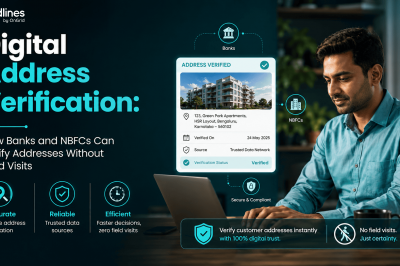
Digital Address Verification: How Banks and NBFCs Can Verify Addresses Without Field Visits
Address verification has traditionally been one of the more operationally intensive steps in customer onboarding for banks and NBFCs. A customer provides an address, a verification executive visits the location, evidence is collected, and the findings are subsequently recorded for review. While this approach can provide physical evidence, it also introduces time, coordination and operational…
-
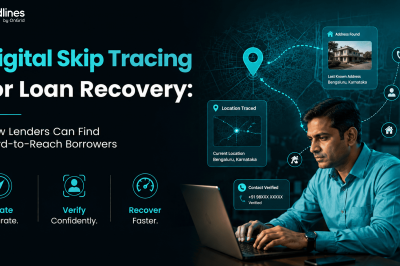
Digital Skip Tracing for Loan Recovery: How Lenders Can Find Hard-to-Reach Borrowers
For lenders, loan recovery does not always end with identifying a defaulting borrower. The bigger challenge can be finding and contacting that borrower when the information available in the loan file is no longer current. Phone numbers may stop working. Addresses collected during onboarding may become outdated. Customers may change jobs, move to another location…
-
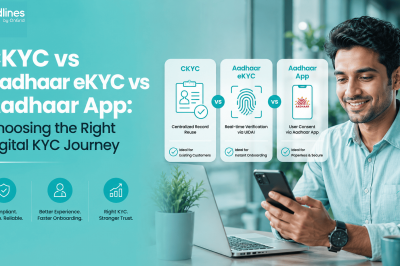
CKYC vs Aadhaar eKYC vs Aadhaar App: Choosing the Right Digital KYC Journey
Digital KYC has changed how banks, NBFCs, fintechs and other financial institutions onboard customers. Customers no longer necessarily need to visit a branch or submit the same identity information repeatedly. However, digital KYC is not a single journey. Depending on the customer’s circumstances, the institution may need to use CKYC, Aadhaar-based eKYC, or an Aadhaar…
-

Video PD for Loan Underwriting: How Banks Can Conduct Remote Borrower Assessments
Loan underwriting is increasingly digital, but not every part of the credit assessment process can be reduced to forms, documents and automated checks. For many lending decisions, particularly in home loans, loan against property (LAP), MSME lending and high-value credit, lenders still need a meaningful conversation with the borrower. Traditionally, these discussions have taken place…
-
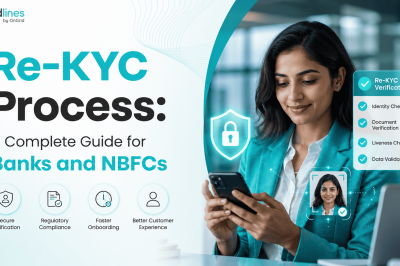
Re-KYC Process: A Complete Guide for Banks and NBFCs
KYC does not end when a customer is onboarded. For banks and NBFCs, customer information needs to remain current throughout the relationship. As customers move through their applicable KYC review cycles, regulated entities need a structured process to identify accounts due for Re-KYC, communicate with customers, collect the required information and maintain evidence of the…
-
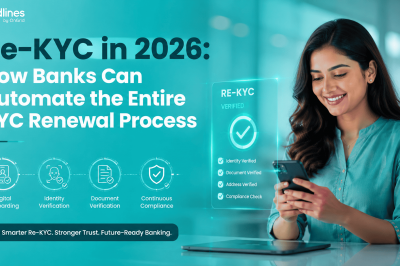
Re-KYC in 2026: How Banks Can Automate the Entire KYC Renewal Process
For banks, Re-KYC is no longer simply a periodic exercise of asking customers to confirm or update their KYC information. At scale, it becomes a complex operational process involving customer identification, communication, reminders, verification, exception handling, system updates and compliance evidence. The challenge becomes even more significant when thousands or millions of customers become due…
-

How to Detect AI-Generated Fake IDs During KYC Verification
Artificial intelligence has made identity verification faster, but it has also made identity fraud harder to spot. Creating a convincing fake identity document once required image-editing skills, access to templates and considerable effort. Today, generative AI and advanced editing tools have lowered that barrier. Fraudsters can manipulate identity documents, alter photographs, create synthetic faces and…
Recent Posts




Categories
- APIs 68
- BFSI 91
- Digital Onboarding 101
- Gridlines 50
- Industry Insights 78
- KYB 13
- MSME 10
- Uncategorized 1
Tags
#GridlinesAPI address verification api AI in Fraud Detection aml API Integration APIIntegration Background check Business Verification digital KYC Digital Onboarding eKYC Employment Verification financial services fintech Fintech Solutions Fraud Prevention gridlines Gridlines API identity verification insurance kyc KYC API Last-Mile Delivery Security lending Prevent Delivery Fraud RC verification TrustEstablishment underwriting Verification video kyc