
-
Video PD for Loans: Faster Borrower Assessment and Underwriting
A loan application can contain financial statements, identity documents, bank records and other supporting information. Yet, for many lending decisions, there is still a need to speak directly with the borrower. This conversation can help lenders understand the purpose of the loan, clarify information in the application and develop a better picture of the borrower’s…
-
Online Address Verification: A Faster, Remote Approach to Customer Onboarding
An address may seem like a straightforward detail to verify during customer onboarding. In practice, it can become one of the most time-consuming steps, particularly for banks, NBFCs, fintech companies and other businesses that rely on physical address verification. A field agent may need to visit the customer’s residence, coordinate a suitable time, collect evidence…
-
Identity SDK for Retail KYC: Aadhaar, DigiLocker and CKYC 2.0
Identity Verification Is No Longer About Choosing One Method. It’s About Orchestrating the Right One. Retail KYC has become more complex than simply collecting an identity document and checking whether the details match. Lenders, banks and other regulated entities must support different customer journeys, work with multiple identity sources and maintain a verification process that…
-

Video PD for Loans: Faster Borrower Assessment and Underwriting
A loan application can contain financial statements, identity documents, bank records and other supporting information. Yet, for many lending decisions, there is still a need to speak directly with the borrower. This conversation can help lenders understand the purpose of the loan, clarify information in the application and develop a better picture of the borrower’s…
-

Online Address Verification: A Faster, Remote Approach to Customer Onboarding
An address may seem like a straightforward detail to verify during customer onboarding. In practice, it can become one of the most time-consuming steps, particularly for banks, NBFCs, fintech companies and other businesses that rely on physical address verification. A field agent may need to visit the customer’s residence, coordinate a suitable time, collect evidence…
-
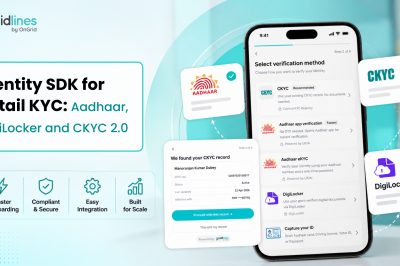
Identity SDK for Retail KYC: Aadhaar, DigiLocker and CKYC 2.0
Identity Verification Is No Longer About Choosing One Method. It’s About Orchestrating the Right One. Retail KYC has become more complex than simply collecting an identity document and checking whether the details match. Lenders, banks and other regulated entities must support different customer journeys, work with multiple identity sources and maintain a verification process that…
-
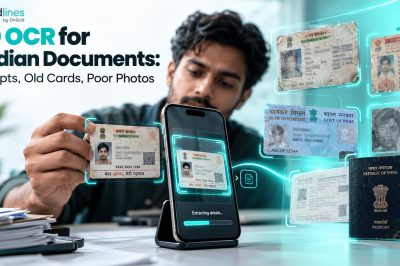
ID OCR for Indian Documents: Scripts, Old Cards, Poor Photos
A customer uploads a photograph of their PAN card. The name is slightly blurred, the image has a glare across the date of birth, and the document is tilted at an angle. The application is otherwise complete. What happens next? In a basic verification workflow, the system may extract the available text and move the…
-
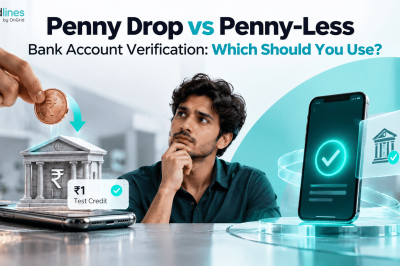
Penny Drop vs Penny Less Bank Account Verification: Which Should You Use?
Sooner or later, every business that pays people has to answer one question: is this bank account real, and does it belong to the person who says it does? Get it wrong and the cost is concrete. A vendor payout lands in a stranger’s account. A loan disbursal bounces and a customer waits three days.…
-

Why KYC Verifications Fail: Top Rejection Reasons
If you run onboarding for a lender, a wallet or a marketplace, you have seen the pattern. A user signs up, gets through four screens, and then the verification step ends in “failed.” Most never come back. The uncomfortable part is that many of these users are genuine. They have real PANs, real Aadhaar numbers…
-
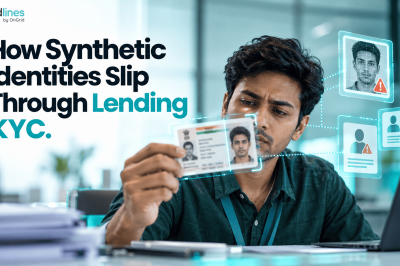
How Synthetic Identities Slip Through Lending KYC
Most lenders build KYC to answer one question: is this document real? A synthetic identity is built to pass exactly that test. A synthetic identity is a profile stitched together from mixed material. It might pair a genuine ID number belonging to someone else with an invented name, birth date or photo. Or it might…
-
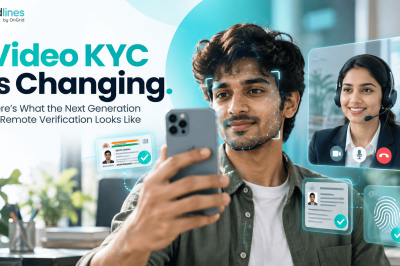
Video KYC Is Changing. Here’s What the Next Generation of Remote Identity Verification Looks Like
At 10:40 on a Thursday night, a loan applicant joined a video KYC session at a mid-sized NBFC. Anita, who heads onboarding operations there, wasn’t on the call. She heard about it the next morning from the agent, who was still a little rattled. The applicant had all the right things. A valid PAN, an…
-

From Candidate to Customer: Can One Trust Infrastructure Support Every Verification Journey?
A person can enter an organisation’s ecosystem in more than one way. They might first appear as a customer opening a bank account, a borrower applying for credit, a merchant joining a marketplace, or a driver registering on a mobility platform. Over time, that same relationship can evolve. The customer may apply for another product.…
-
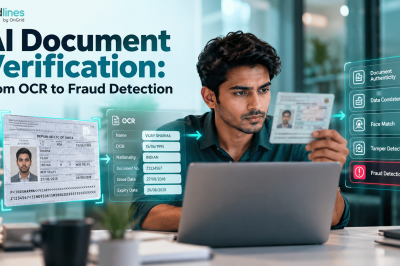
AI Document Verification: From OCR to Fraud Detection
Digital onboarding has made it possible for customers and businesses to open accounts, apply for financial products and access services without visiting a branch or submitting physical documents. But there is a catch: the faster onboarding becomes, the more important it is to know whether the documents being submitted are genuine. A scanned identity document…