
-
Merchant Onboarding: A Complete Guide to KYC, Risk Management & Payouts
Merchant onboarding is a critical step in building a trusted digital payments ecosystem. For banks, payment aggregators, payment gateways and merchant acquiring businesses, onboarding a merchant involves much more than collecting documents and activating a payment account. Businesses need to establish merchant identity, validate business credentials, assess potential risks and ensure that onboarding processes meet…
-
Video PD for Loans: Faster Borrower Assessment and Underwriting
A loan application can contain financial statements, identity documents, bank records and other supporting information. Yet, for many lending decisions, there is still a need to speak directly with the borrower. This conversation can help lenders understand the purpose of the loan, clarify information in the application and develop a better picture of the borrower’s…
-
Online Address Verification: A Faster, Remote Approach to Customer Onboarding
An address may seem like a straightforward detail to verify during customer onboarding. In practice, it can become one of the most time-consuming steps, particularly for banks, NBFCs, fintech companies and other businesses that rely on physical address verification. A field agent may need to visit the customer’s residence, coordinate a suitable time, collect evidence…
-

How to Build a Risk-Based Customer Onboarding Flow Using Verification APIs
Customer onboarding has changed. For banks, NBFCs, lenders and fintech companies, onboarding is no longer simply about collecting a PAN, Aadhaar or other identity document and checking whether the details match. Every new customer brings a different level of risk — and treating every customer the same can create problems at both ends. A low-risk…
-
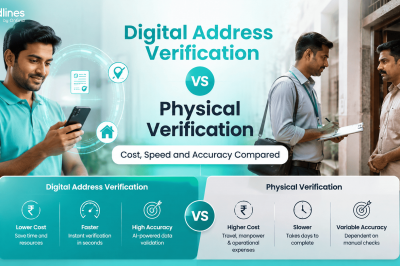
Digital Address Verification vs Physical Verification
Address verification has long been associated with physical field visits. A verification executive visits the customer’s address, confirms the location, collects relevant evidence and submits a verification report. For banks, NBFCs, fintechs and other businesses processing customers at scale, however, physical verification can become difficult to sustain as the default approach for every case. The…
-
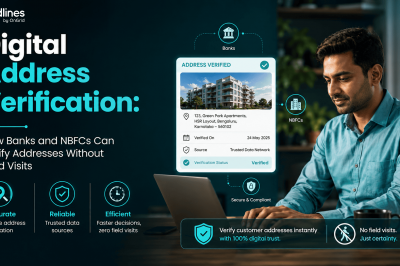
Digital Address Verification: How Banks and NBFCs Can Verify Addresses Without Field Visits
Address verification has traditionally been one of the more operationally intensive steps in customer onboarding for banks and NBFCs. A customer provides an address, a verification executive visits the location, evidence is collected, and the findings are subsequently recorded for review. While this approach can provide physical evidence, it also introduces time, coordination and operational…
-
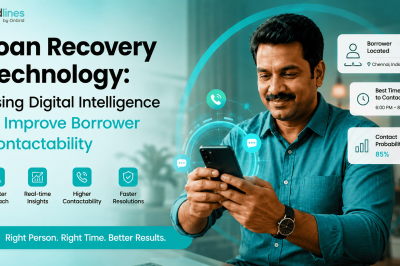
Loan Recovery Technology: Using Digital Intelligence to Improve Borrower Contactability
Loan recovery teams work with one fundamental requirement: they need to be able to reach the borrower. But borrower contactability can deteriorate over time. The phone number available in the loan application may no longer be active. The customer may have moved to a different address. An email may no longer work. A borrower may…
-
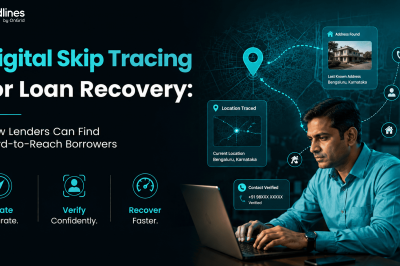
Digital Skip Tracing for Loan Recovery: How Lenders Can Find Hard-to-Reach Borrowers
For lenders, loan recovery does not always end with identifying a defaulting borrower. The bigger challenge can be finding and contacting that borrower when the information available in the loan file is no longer current. Phone numbers may stop working. Addresses collected during onboarding may become outdated. Customers may change jobs, move to another location…
-
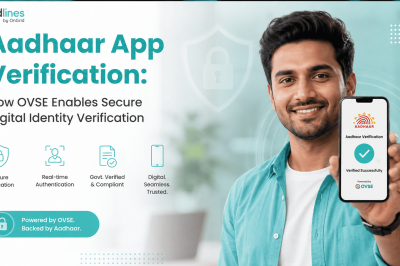
Aadhaar App Verification: How OVSE Enables Secure Digital Identity Verification
Digital identity verification is moving toward journeys where customers can participate directly in sharing and confirming their identity. For banks, NBFCs, fintechs and other regulated businesses, this creates an opportunity to make onboarding more convenient while maintaining stronger verification controls. One such approach is Aadhaar App verification through an Online Verification Service Entity (OVSE) journey.…
-
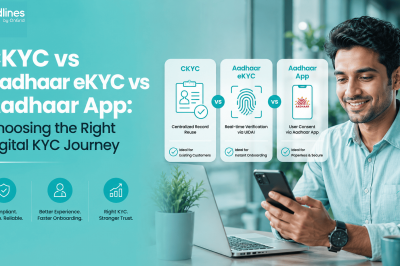
CKYC vs Aadhaar eKYC vs Aadhaar App: Choosing the Right Digital KYC Journey
Digital KYC has changed how banks, NBFCs, fintechs and other financial institutions onboard customers. Customers no longer necessarily need to visit a branch or submit the same identity information repeatedly. However, digital KYC is not a single journey. Depending on the customer’s circumstances, the institution may need to use CKYC, Aadhaar-based eKYC, or an Aadhaar…
-
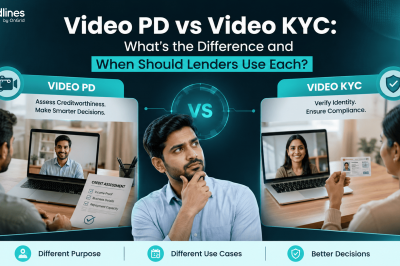
Video PD vs Video KYC: What’s the Difference and When Should Lenders Use Each?
Video KYC and Video Personal Discussion (Video PD) both use video to connect financial institutions with customers remotely. That similarity can make the two appear interchangeable. They are not. The two serve different purposes in the financial services lifecycle. Video KYC is primarily about establishing and verifying customer identity as part of the KYC process.…
-

Video PD for Loan Underwriting: How Banks Can Conduct Remote Borrower Assessments
Loan underwriting is increasingly digital, but not every part of the credit assessment process can be reduced to forms, documents and automated checks. For many lending decisions, particularly in home loans, loan against property (LAP), MSME lending and high-value credit, lenders still need a meaningful conversation with the borrower. Traditionally, these discussions have taken place…
-
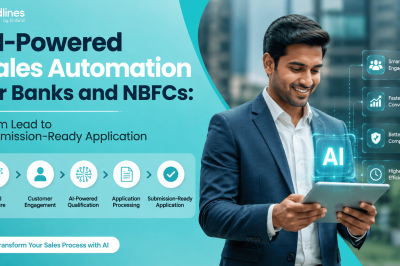
AI-Powered Sales Automation for Banks and NBFCs: From Lead to Submission-Ready Application
For banks and NBFCs, sales technology has traditionally been built around individual stages of the customer journey. A CRM manages leads. A loan origination system manages applications. An LMS may support learning and training, while other platforms handle communication, documents, incentives and internal workflows. Each system may perform its intended function effectively. The challenge begins…