
-
Merchant Onboarding: A Complete Guide to KYC, Risk Management & Payouts
Merchant onboarding is a critical step in building a trusted digital payments ecosystem. For banks, payment aggregators, payment gateways and merchant acquiring businesses, onboarding a merchant involves much more than collecting documents and activating a payment account. Businesses need to establish merchant identity, validate business credentials, assess potential risks and ensure that onboarding processes meet…
-
Video PD for Loans: Faster Borrower Assessment and Underwriting
A loan application can contain financial statements, identity documents, bank records and other supporting information. Yet, for many lending decisions, there is still a need to speak directly with the borrower. This conversation can help lenders understand the purpose of the loan, clarify information in the application and develop a better picture of the borrower’s…
-
Online Address Verification: A Faster, Remote Approach to Customer Onboarding
An address may seem like a straightforward detail to verify during customer onboarding. In practice, it can become one of the most time-consuming steps, particularly for banks, NBFCs, fintech companies and other businesses that rely on physical address verification. A field agent may need to visit the customer’s residence, coordinate a suitable time, collect evidence…
-
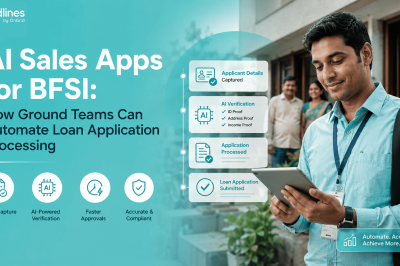
AI Sales App for BFSI: How Ground Teams Can Automate Loan Application Processing
Digital transformation has significantly changed how banks and NBFCs process loans. Customer information can be captured digitally, credit decisions can be supported by technology, and loan origination systems can automate several backend processes. Yet, there is one part of the lending journey that remains heavily dependent on manual execution: the ground sales team. Relationship managers,…
-
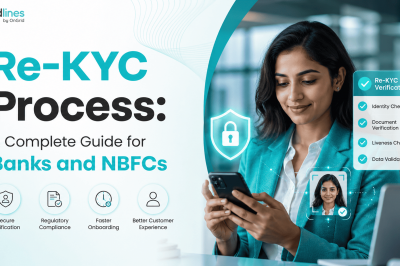
Re-KYC Process: A Complete Guide for Banks and NBFCs
KYC does not end when a customer is onboarded. For banks and NBFCs, customer information needs to remain current throughout the relationship. As customers move through their applicable KYC review cycles, regulated entities need a structured process to identify accounts due for Re-KYC, communicate with customers, collect the required information and maintain evidence of the…
-
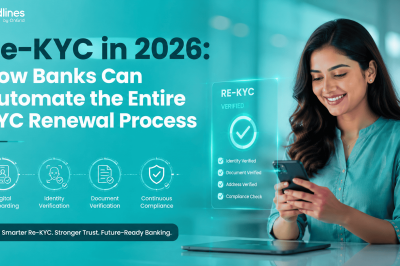
Re-KYC in 2026: How Banks Can Automate the Entire KYC Renewal Process
For banks, Re-KYC is no longer simply a periodic exercise of asking customers to confirm or update their KYC information. At scale, it becomes a complex operational process involving customer identification, communication, reminders, verification, exception handling, system updates and compliance evidence. The challenge becomes even more significant when thousands or millions of customers become due…
-

Face Match vs Face Liveness Detection: Why You Need Both
A selfie can tell you what a person looks like. It cannot, by itself, tell you whether the person is actually standing in front of the camera. That distinction is becoming increasingly important as financial services, fintech platforms, marketplaces, insurance companies, lending platforms and other digital businesses move identity verification online. A typical verification journey…
-

Verification APIs Every HRTech Platform Should Offer
HR technology has made hiring faster. Candidates can apply online, interviews can happen remotely, offer letters can be generated automatically, and employee onboarding can be completed without a single physical document changing hands. But there is a trade-off. The more of the hiring journey that moves online, the more HRTech platforms need to answer a…
-

Merchant Onboarding Checklist for Fintechs and Payment Platforms
Merchant onboarding looks simple from the outside. A business submits its details, uploads a few documents, completes verification and gets approved. But anyone who has managed merchant onboarding at scale knows that the real process is rarely this straightforward. A merchant may have a valid GSTIN but questionable business details. A company may be legally…
-

Invisible Fraud Signals Every Digital Business Should Monitor
Fraud rarely announces itself. There is usually no dramatic warning, no obvious fake document and no single transaction that immediately tells a business something is wrong. Instead, fraud often hides inside ordinary-looking activity: a new user signing up from a familiar location, a perfectly valid identity document, a genuine bank account or a series of…
-

How to Verify a GST Number Online Using GSTIN (Step-by-Step Guide)
Before doing business with a new supplier, distributor or service provider, checking their GST registration is a simple step that can prevent avoidable compliance and financial issues. A GSTIN tells you whether a business is registered under the Goods and Services Tax system. But simply receiving a GST certificate or seeing a GST number on…
-

Contact Point Verification vs Video KYC: Which Verification Method Is Right?
Customer verification is no longer limited to checking an identity document. For businesses operating in lending, fintech, insurance, banking, marketplaces and other digital-first sectors, the real challenge is establishing that the customer is genuine, reachable and eligible without making the onboarding process unnecessarily complicated. This is where different verification methods come into play. Contact Point…
-

How to Detect AI-Generated Fake IDs During KYC Verification
Artificial intelligence has made identity verification faster, but it has also made identity fraud harder to spot. Creating a convincing fake identity document once required image-editing skills, access to templates and considerable effort. Today, generative AI and advanced editing tools have lowered that barrier. Fraudsters can manipulate identity documents, alter photographs, create synthetic faces and…