
-
Merchant Onboarding: A Complete Guide to KYC, Risk Management & Payouts
Merchant onboarding is a critical step in building a trusted digital payments ecosystem. For banks, payment aggregators, payment gateways and merchant acquiring businesses, onboarding a merchant involves much more than collecting documents and activating a payment account. Businesses need to establish merchant identity, validate business credentials, assess potential risks and ensure that onboarding processes meet…
-
Video PD for Loans: Faster Borrower Assessment and Underwriting
A loan application can contain financial statements, identity documents, bank records and other supporting information. Yet, for many lending decisions, there is still a need to speak directly with the borrower. This conversation can help lenders understand the purpose of the loan, clarify information in the application and develop a better picture of the borrower’s…
-
Online Address Verification: A Faster, Remote Approach to Customer Onboarding
An address may seem like a straightforward detail to verify during customer onboarding. In practice, it can become one of the most time-consuming steps, particularly for banks, NBFCs, fintech companies and other businesses that rely on physical address verification. A field agent may need to visit the customer’s residence, coordinate a suitable time, collect evidence…
-

How Verification APIs Reduce Fraud in Insurance Claims
Insurance is built on trust. Every policy issued and every claim settled is based on the assumption that the information provided by the customer is genuine. However, as the industry has embraced digital-first experiences, fraudsters have become equally sophisticated, exploiting gaps in identity verification, documentation, and claims processing. According to industry estimates, insurance fraud costs…
-
The Complete Guide to Digital Trust Infrastructure
Trust has always been fundamental to business. But in a digital-first economy, trust works differently. You may never meet your customers in person. Your merchants could be onboarded remotely. Your partners may operate across multiple geographies. Transactions happen instantly, often at massive scale. This convenience has transformed business operations—but it has also introduced a critical…
-
KYC vs KYB vs AML: Understanding the Difference
In today’s digital economy, trust has become a business-critical asset. Whether you are onboarding an individual customer, verifying a merchant, or screening transactions for suspicious behavior, identity and compliance checks are no longer optional—they are foundational. This is where three terms frequently appear in compliance and risk conversations: KYC, KYB, and AML. They are often…
-
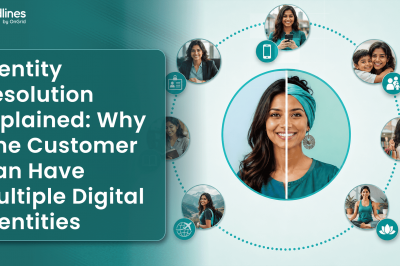
Identity Resolution Explained: Why One Customer Can Have Multiple Digital Identities
In digital systems, identity is rarely as straightforward as it appears. On paper, a customer may seem easy to define. A name, phone number, email address, government-issued ID, bank account, and a few supporting documents should be enough to establish who they are. But digital identity does not work that way. A single customer can…
-
What Is Risk-Based Customer Onboarding?
Customer onboarding has changed dramatically over the last few years. Today, businesses are expected to onboard users faster than ever. A customer can open a bank account, apply for a loan, sign up for a digital wallet, or join a marketplace in just a few minutes—often without any physical interaction. That speed has transformed customer…
-
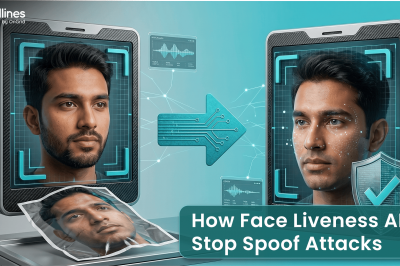
How Face Liveness APIs Stop Spoof Attacks
Digital identity verification has become significantly more sophisticated over the last few years. But so has fraud. As businesses continue moving toward digital onboarding and remote authentication, fraudsters are evolving just as quickly. What once involved fake documents or stolen credentials has now expanded into far more advanced attacks—photo spoofing, replay attacks, video injections, and…
-

5 Ways to Verify if a Company Is Legitimate
In today’s digital economy, businesses are onboarding other businesses faster than ever. A lender underwriting an MSME. A fintech onboarding merchants. A marketplace approving sellers. A large enterprise evaluating vendors. Different workflows, same challenge: trust. How do you verify whether a company is legitimate—quickly, accurately, and at scale? This is no longer a simple due…
-
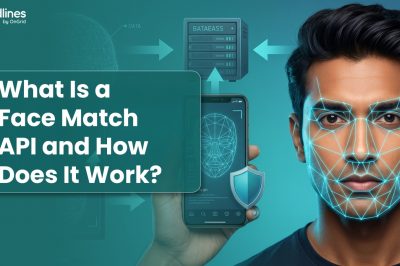
What Is a Face Match API and How Does It Work?
In digital onboarding, trust is everything. Every time a customer opens a bank account, applies for a loan, joins a gig platform, or signs up as a merchant, businesses are making a critical decision: can this identity be trusted? That decision has become far more complex in recent years. Fraudsters are no longer relying only…
-
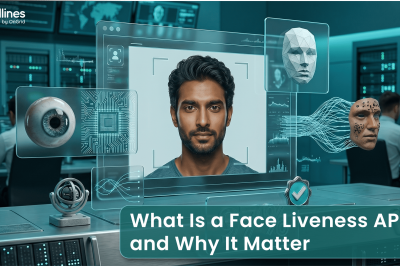
What Is a Face Liveness API and Why It Matters
Digital identity verification has evolved rapidly over the last few years. What began with document uploads and OTP verification has now moved toward real-time biometric authentication. Businesses today need faster onboarding, stronger fraud controls, and better customer experiences—all at the same time. That creates a difficult challenge. How do you verify that the person behind…
-
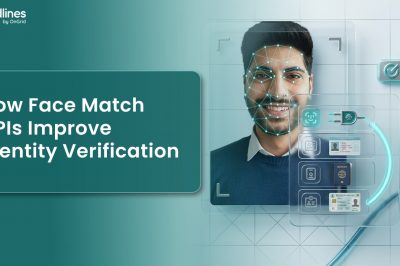
How Face Verification API Improve Identity Verification
Identity verification has become one of the most critical layers of digital trust. Whether it is onboarding a banking customer, approving a loan application, verifying a gig worker, or securing access to sensitive accounts, businesses today are constantly making trust decisions in digital environments. And in most cases, those decisions need to happen instantly. That…