
-
Merchant Onboarding: A Complete Guide to KYC, Risk Management & Payouts
Merchant onboarding is a critical step in building a trusted digital payments ecosystem. For banks, payment aggregators, payment gateways and merchant acquiring businesses, onboarding a merchant involves much more than collecting documents and activating a payment account. Businesses need to establish merchant identity, validate business credentials, assess potential risks and ensure that onboarding processes meet…
-
Video PD for Loans: Faster Borrower Assessment and Underwriting
A loan application can contain financial statements, identity documents, bank records and other supporting information. Yet, for many lending decisions, there is still a need to speak directly with the borrower. This conversation can help lenders understand the purpose of the loan, clarify information in the application and develop a better picture of the borrower’s…
-
Online Address Verification: A Faster, Remote Approach to Customer Onboarding
An address may seem like a straightforward detail to verify during customer onboarding. In practice, it can become one of the most time-consuming steps, particularly for banks, NBFCs, fintech companies and other businesses that rely on physical address verification. A field agent may need to visit the customer’s residence, coordinate a suitable time, collect evidence…
-
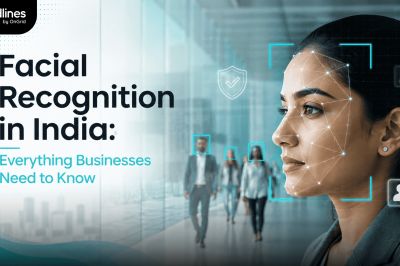
Facial Recognition in India: Everything Businesses Need to Know
Facial recognition is no longer limited to airports, smartphones or security cameras. In India, businesses are increasingly exploring facial recognition for identity verification, digital onboarding, fraud prevention, attendance, access control and other use cases where knowing that a person is who they claim to be matters. The technology is particularly relevant for businesses operating digitally.…
-

8 Features to Look for in an eSign Solution Before You Choose One
A customer applying for a loan, an employee accepting an offer letter, or a business signing a partnership agreement — almost every important business interaction eventually reaches one common step: signing a document. Traditionally, this meant printing paperwork, arranging physical signatures, scanning documents, and maintaining records. While this process worked for decades, it no longer…
-

The New Face of Fraud: Deepfakes and the Future of Video KYC
In 2023, deepfake fraud in Video KYC emerged as one of the biggest threats facing financial institutions. Deepfake attacks against fintechs jumped more than 700%, while identity fraud losses exceeded $43 billion globally. As cybercriminals use AI to manipulate faces, voices, and identities, simply meeting regulatory requirements is no longer enough. For banks and other…
-
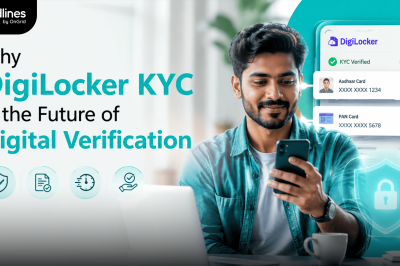
Why DigiLocker KYC Is the Future of Digital Verification
Digital onboarding has evolved significantly over the last decade. Customers no longer expect to visit branches, submit physical photocopies, or wait days for their identity and documents to be verified. They expect onboarding to be instant, secure, and entirely digital. At the same time, businesses face increasing pressure to prevent identity fraud, comply with regulatory…
-

10 DigiLocker API Use Cases for Businesses
India’s digital economy is built on trust. Whether it’s onboarding a customer, approving a loan, hiring an employee, or issuing an insurance policy, businesses need to verify documents quickly without compromising security or compliance. Yet, many organisations still depend on customers uploading scanned documents or photographs, which often leads to delays, poor document quality, manual…
-
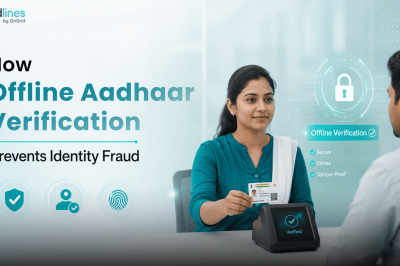
How Offline Aadhaar Verification Prevents Identity Fraud
Identity fraud has become one of the biggest challenges for businesses that onboard customers digitally. Fraudsters today are no longer limited to forged documents. They use edited Aadhaar cards, stolen identities, synthetic profiles, AI-generated images, and deepfakes to bypass verification systems. For banks, NBFCs, fintech companies, insurers, telecom operators, and digital-first businesses, a single fraudulent…
-
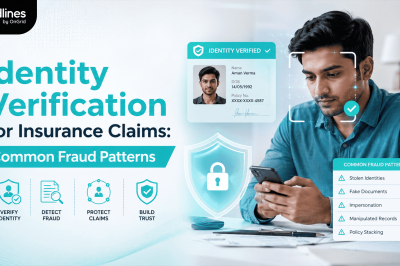
Identity Verification for Insurance Claims: Common Fraud Patterns
Insurance fraud rarely depends on one obviously fake document. In many cases, the information submitted during a claim may look perfectly reasonable. The claimant may have a genuine identity document, a valid policy and legitimate supporting paperwork. The problem only becomes visible when different pieces of information are compared with each other. A name doesn’t…
-
How to Build a Fraud Detection Stack for Indian Businesses
Every business wants to stop fraud. Yet, many approach it the wrong way. The typical response to rising fraud is to add another tool—a document verification solution, a device fingerprinting platform, an OTP check, or a credit bureau integration. Over time, the fraud team ends up with multiple disconnected systems, each solving one problem while…
-

10 Signals Every Lending Platform Should Check Before Loan Approval
Digital lending has transformed the way borrowers access credit. What once took days or weeks can now happen in a matter of minutes. Customers expect instant approvals, paperless onboarding, and quick disbursals, while lenders strive to deliver seamless experiences without compromising on risk. But speed comes with a trade-off. Fraudsters have become increasingly sophisticated, using…
-
Building Trust in Matrimonial Platforms Through Verification
Finding a life partner has increasingly become a digital journey. Millions of people now turn to matrimonial platforms to meet prospective matches, connect with families, and begin relationships that could shape the rest of their lives. While technology has made matchmaking more accessible than ever, it has also introduced new challenges. Fake profiles, identity fraud,…