
-
Merchant Onboarding: A Complete Guide to KYC, Risk Management & Payouts
Merchant onboarding is a critical step in building a trusted digital payments ecosystem. For banks, payment aggregators, payment gateways and merchant acquiring businesses, onboarding a merchant involves much more than collecting documents and activating a payment account. Businesses need to establish merchant identity, validate business credentials, assess potential risks and ensure that onboarding processes meet…
-
Video PD for Loans: Faster Borrower Assessment and Underwriting
A loan application can contain financial statements, identity documents, bank records and other supporting information. Yet, for many lending decisions, there is still a need to speak directly with the borrower. This conversation can help lenders understand the purpose of the loan, clarify information in the application and develop a better picture of the borrower’s…
-
Online Address Verification: A Faster, Remote Approach to Customer Onboarding
An address may seem like a straightforward detail to verify during customer onboarding. In practice, it can become one of the most time-consuming steps, particularly for banks, NBFCs, fintech companies and other businesses that rely on physical address verification. A field agent may need to visit the customer’s residence, coordinate a suitable time, collect evidence…
-
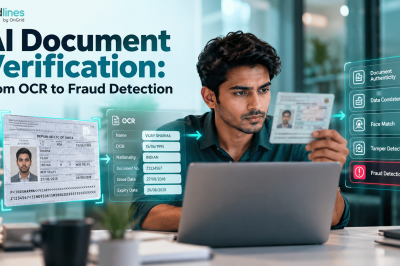
AI Document Verification: From OCR to Fraud Detection
Digital onboarding has made it possible for customers and businesses to open accounts, apply for financial products and access services without visiting a branch or submitting physical documents. But there is a catch: the faster onboarding becomes, the more important it is to know whether the documents being submitted are genuine. A scanned identity document…
-
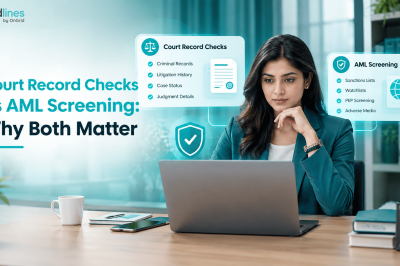
Court Record Checks vs AML Screening: Why Both Matter
When organisations assess the risk associated with a person, customer, employee, partner or business relationship, one check rarely tells the complete story. A criminal or court record can reveal legal proceedings, while AML screening can identify exposure to sanctions, politically exposed persons and other financial-crime risks. This is why understanding court record checks vs AML…
-

Adverse Media Screening: What to Check Beyond a Name Search
Searching a customer’s name across news sources sounds straightforward. In practice, it is one of the more difficult parts of modern financial crime screening. A name search can surface hundreds of results, but very few may actually relate to the person or business being screened. At the same time, relying only on an exact-name match…
-
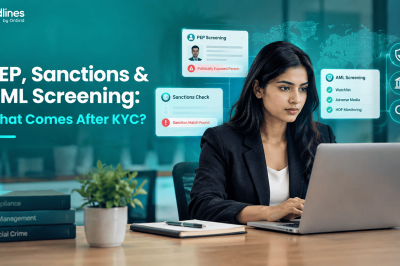
PEP, Sanctions & AML Screening: What Comes After KYC?
Completing KYC does not necessarily mean a customer is safe to onboard. KYC helps establish who the customer is and verifies information such as identity, address and other required details. But once the identity is established, financial institutions and businesses still need to understand who they are dealing with from a risk perspective. This is…
-
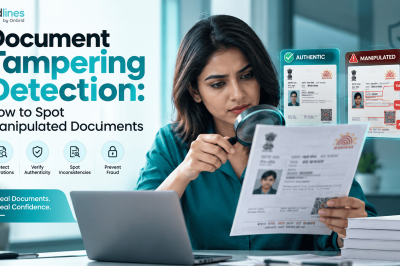
Document Tampering Detection: How to Spot Manipulated Documents
Document tampering detection is the process of checking whether a document was changed after it was issued. It combines visual inspection, file forensics, data cross-checks and automated models to catch edited numbers, swapped photos, altered dates and rebuilt templates. Anyone who has reviewed loan files knows the uncomfortable part. The tampered document usually looks fine.…
-
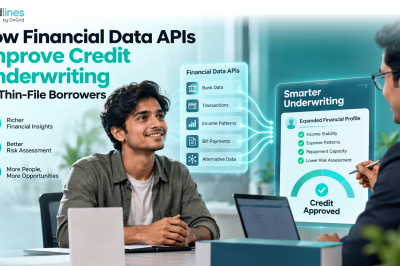
How Financial Data APIs Improve Credit Underwriting for Thin-File Borrowers
A borrower can have a steady income, regular expenses and a healthy cash flow, yet still look difficult to assess on paper. This is common with thin-file borrowers: customers with limited or no formal credit history, first-time borrowers, self-employed individuals and small businesses whose financial activity does not fit neatly into traditional underwriting models. For…
-
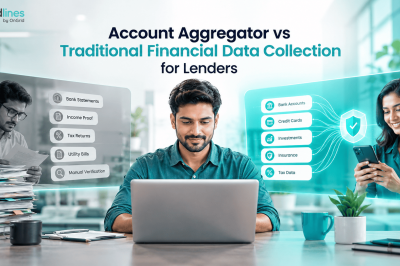
Account Aggregator vs Traditional Financial Data Collection for Lenders
For lenders, financial data is only useful when it is reliable, accessible and available at the right point in the credit journey. Traditionally, collecting this information has meant asking borrowers to upload bank statements, income documents and other financial records. It works, but the process can become slow and operationally heavy, particularly when lenders need…
-
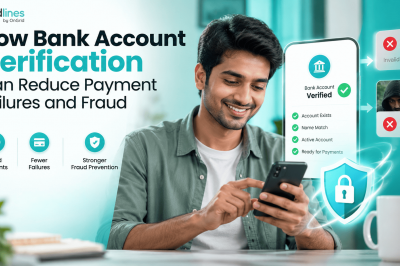
How Bank Account Verification Can Reduce Payment Failures and Fraud
A payment can fail for a surprisingly simple reason: the money is being sent to the wrong account. An incorrect account number, invalid IFSC, inactive account or mismatch in beneficiary details can turn a routine payment into a failed transaction. In lending, the consequences can be more significant. A lender may have completed KYC, approved…
-
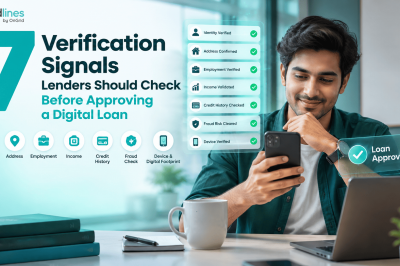
7 Verification Signals Lenders Should Check Before Approving a Digital Loan
A digital loan application can look clean on paper. The PAN is valid. The Aadhaar details match. The applicant has a good credit score. A salary slip has been uploaded and the bank account is active. But none of these checks, on their own, tells a lender the full story. Digital lending has changed the…
-

From KYC to KYB: Building a Unified Verification Stack
For a financial institution, verifying a customer is only one part of the onboarding process. The moment that customer represents a business, the verification question becomes much broader. Is the business legally valid? Who owns it? Who controls it? Are the directors genuine? Are the beneficial owners verified? Does the business information match what has…