
BFSI
-

PEP, Sanctions & AML Screening: What Comes After KYC?
Completing KYC does not necessarily mean a customer is safe to onboard. KYC helps establish who the customer is and verifies information such as identity, address and other required details. But once the identity is established, financial institutions and businesses still need to understand who they are dealing with from a risk perspective. This is…
-
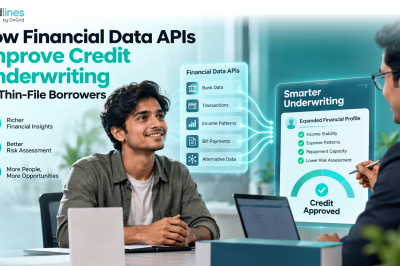
How Financial Data APIs Improve Credit Underwriting for Thin-File Borrowers
A borrower can have a steady income, regular expenses and a healthy cash flow, yet still look difficult to assess on paper. This is common with thin-file borrowers: customers with limited or no formal credit history, first-time borrowers, self-employed individuals and small businesses whose financial activity does not fit neatly into traditional underwriting models. For…
-
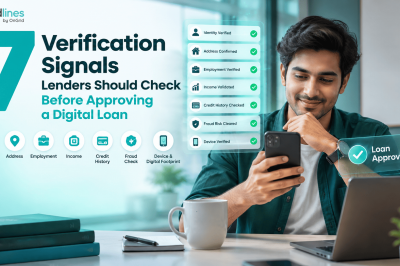
7 Verification Signals Lenders Should Check Before Approving a Digital Loan
A digital loan application can look clean on paper. The PAN is valid. The Aadhaar details match. The applicant has a good credit score. A salary slip has been uploaded and the bank account is active. But none of these checks, on their own, tells a lender the full story. Digital lending has changed the…
-
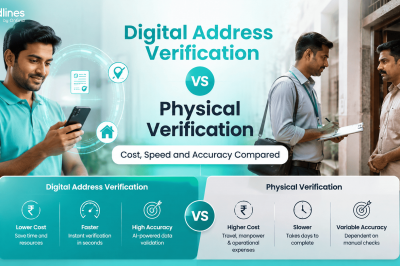
Digital Address Verification vs Physical Verification
Address verification has long been associated with physical field visits. A verification executive visits the customer’s address, confirms the location, collects relevant evidence and submits a verification report. For banks, NBFCs, fintechs and other businesses processing customers at scale, however, physical verification can become difficult to sustain as the default approach for every case. The…
-

Aadhaar App Verification: How OVSE Enables Secure Digital Identity Verification
Digital identity verification is moving toward journeys where customers can participate directly in sharing and confirming their identity. For banks, NBFCs, fintechs and other regulated businesses, this creates an opportunity to make onboarding more convenient while maintaining stronger verification controls. One such approach is Aadhaar App verification through an Online Verification Service Entity (OVSE) journey.…
-

Video PD vs Video KYC: What’s the Difference and When Should Lenders Use Each?
Video KYC and Video Personal Discussion (Video PD) both use video to connect financial institutions with customers remotely. That similarity can make the two appear interchangeable. They are not. The two serve different purposes in the financial services lifecycle. Video KYC is primarily about establishing and verifying customer identity as part of the KYC process.…
-
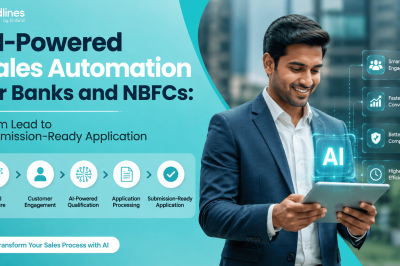
AI-Powered Sales Automation for Banks and NBFCs: From Lead to Submission-Ready Application
For banks and NBFCs, sales technology has traditionally been built around individual stages of the customer journey. A CRM manages leads. A loan origination system manages applications. An LMS may support learning and training, while other platforms handle communication, documents, incentives and internal workflows. Each system may perform its intended function effectively. The challenge begins…
-
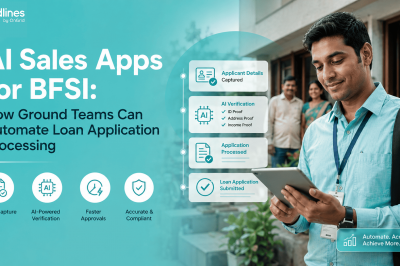
AI Sales App for BFSI: How Ground Teams Can Automate Loan Application Processing
Digital transformation has significantly changed how banks and NBFCs process loans. Customer information can be captured digitally, credit decisions can be supported by technology, and loan origination systems can automate several backend processes. Yet, there is one part of the lending journey that remains heavily dependent on manual execution: the ground sales team. Relationship managers,…
-
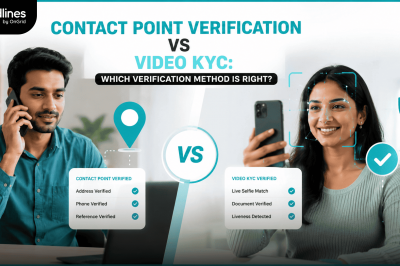
Contact Point Verification vs Video KYC: Which Verification Method Is Right?
Customer verification is no longer limited to checking an identity document. For businesses operating in lending, fintech, insurance, banking, marketplaces and other digital-first sectors, the real challenge is establishing that the customer is genuine, reachable and eligible without making the onboarding process unnecessarily complicated. This is where different verification methods come into play. Contact Point…
-

The New Face of Fraud: Deepfakes and the Future of Video KYC
In 2023, deepfake fraud in Video KYC emerged as one of the biggest threats facing financial institutions. Deepfake attacks against fintechs jumped more than 700%, while identity fraud losses exceeded $43 billion globally. As cybercriminals use AI to manipulate faces, voices, and identities, simply meeting regulatory requirements is no longer enough. For banks and other…
Recent Posts





Categories
- APIs 68
- BFSI 91
- Digital Onboarding 101
- Gridlines 50
- Industry Insights 78
- KYB 13
- MSME 10
- Uncategorized 1
Tags
#GridlinesAPI address verification api AI in Fraud Detection aml API Integration APIIntegration Background check Business Verification digital KYC Digital Onboarding eKYC Employment Verification financial services fintech Fintech Solutions Fraud Prevention gridlines Gridlines API identity verification insurance kyc KYC API Last-Mile Delivery Security lending Prevent Delivery Fraud RC verification TrustEstablishment underwriting Verification video kyc