
Industry Insights
-
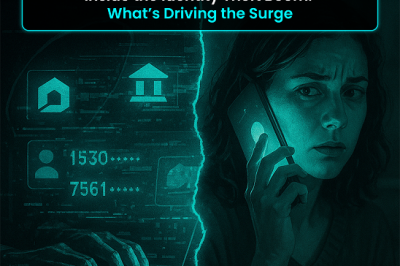
Inside the Identity Theft Boom: What’s Driving the Surge
A few years ago, my friend got a call from “her bank.” The voice on the other end was polite, well-spoken, and oddly familiar. It was asking about a flagged transaction, reading out her account details, and even confirming her date of birth. Something didn’t feel right, so she hung up. Two hours later, her…
-

Face Based Biometrics: Changing Identity Verification?
Not too long ago, protecting your identity online was a matter of memorising a tricky password or carrying around some form of ID. Back then, it felt adequate. These tools gave us a sense of control—until they didn’t. Now, data breaches are a weekly headline. Passwords leak. ID cards are forged. Even “secure” two-factor authentication…
-
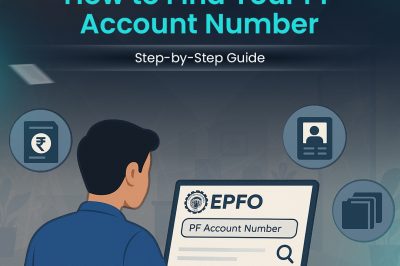
How to Find Your PF Account Number: Step-by-Step Guide
First, Why Does This Even Matter? Ever tried withdrawing your PF money and hit a wall? Or switched jobs and had no clue how to transfer your old PF account? That’s usually where this mysterious little thing called your PF Account Number comes in. It’s not just a number. It’s your identity in the EPFO…
-
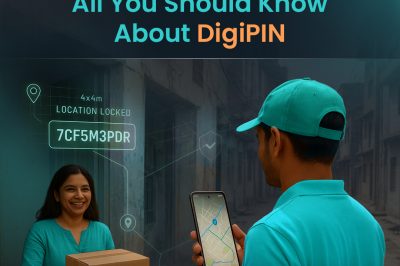
All You Should Know About DigiPIN
If you’ve ever had a courier delayed because the delivery guy “couldn’t find your house,” you’re not alone. Addresses in India can be messy, confusing, and often incomplete. But that may be about to change—thanks to a powerful new system called DigiPIN. Let’s dive into what DigiPIN is, why it matters, how it works, and…
-

The Rise of Thin-Files Borrowers: How NBFCs Can De-Risk Lending to First-Time Borrowers
In a country as vast and diverse as India, access to credit remains uneven. While banks have traditionally catered to customers with an established credit history, a significant population, first-time borrowers with little or no formal credit footprint continues to be underserved. These individuals are commonly referred to as “thin-file” customers. For Non-Banking Financial Companies…
-

Dealing with Loan Stacking? Build a Risk Stack That Strikes Back
It starts quietly. A borrower, approved for a loan based on a clean credit file and stable income, begins taking on more credit from other lenders within days—sometimes hours—of your disbursal. By the time your repayment schedule kicks in, their debt has doubled. And your risk? It just multiplied too. This practice—called loan stacking—isn’t new.…
-
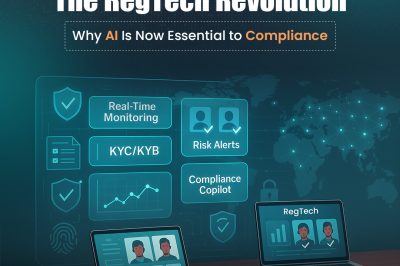
The RegTech Revolution: Why AI Is Now Essential to Compliance
Regulatory complexity is increasing. Fraud threats are changing more rapidly than ever before. And legacy compliance infrastructure—remain based on stagnant audits, spreadsheets, and siloed checklists—isn’t keeping pace. As McKinsey’s 2023 RegTech report states, forward-thinking companies are now no longer waiting for regulatory requirements to respond—they’re implementing technologies that facilitate ongoing, real-time compliance. AI-powered systems are…
-
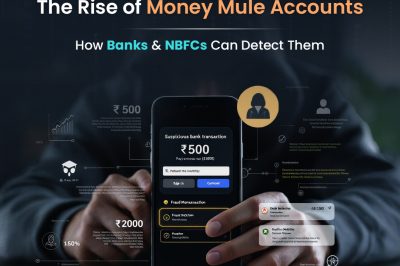
The Rise of Money Mule Accounts: How Banks & NBFCs Can Detect Them
“You don’t need to rob a bank to launder money these days — you just need a naive customer and a smartphone.” Money mule accounts are rapidly becoming a preferred weapon of choice for cybercriminals. As banks and NBFCs invest in sophisticated digital infrastructure, criminals adapt and exploit human loopholes instead — namely, unsuspecting or…
-
Hidden Impact of Money Laundering in Global Economy
Money laundering is a significant financial crime that poses a hidden threat to economies, markets, and vital sectors worldwide. It involves disguising the origin of illicit funds to make them appear legitimate, often through a series of complex financial transactions. While the immediate impacts of money laundering, such as financial fraud, are widely recognized, its…
-
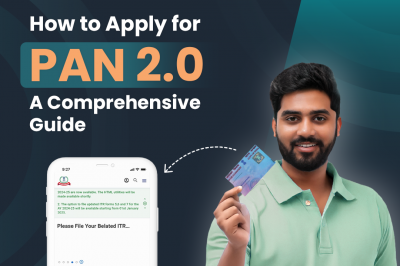
How to Apply for PAN 2.0: A Comprehensive Guide
The Permanent Account Number (PAN) has long been a cornerstone of financial identification in India, linking individuals and entities to their tax responsibilities. In a bid to modernize and streamline processes, PAN 2.0 has emerged as an upgrade to the traditional PAN, equipped with enhanced features and easier application methods. If you’re looking to understand…
Recent Posts
- Merchant Onboarding: A Complete Guide to KYC, Risk Management & Payouts

- Video PD for Loans: Faster Borrower Assessment and Underwriting

- Online Address Verification: A Faster, Remote Approach to Customer Onboarding

- Identity SDK for Retail KYC: Aadhaar, DigiLocker and CKYC 2.0

- ID OCR for Indian Documents: Scripts, Old Cards, Poor Photos

Categories
- APIs 68
- BFSI 96
- Digital Onboarding 106
- Gridlines 50
- Industry Insights 78
- KYB 14
- MSME 10
- Uncategorized 1
Tags
#GridlinesAPI address verification api AI in Fraud Detection aml API Integration APIIntegration Background check Business Verification digital KYC Digital Onboarding eKYC Employment Verification financial services fintech Fintech Solutions Fraud Prevention gridlines Gridlines API identity verification insurance kyc KYC API Last-Mile Delivery Security lending Prevent Delivery Fraud RC verification TrustEstablishment underwriting Verification video kyc