
-
Merchant Onboarding: A Complete Guide to KYC, Risk Management & Payouts
Merchant onboarding is a critical step in building a trusted digital payments ecosystem. For banks, payment aggregators, payment gateways and merchant acquiring businesses, onboarding a merchant involves much more than collecting documents and activating a payment account. Businesses need to establish merchant identity, validate business credentials, assess potential risks and ensure that onboarding processes meet…
-
Video PD for Loans: Faster Borrower Assessment and Underwriting
A loan application can contain financial statements, identity documents, bank records and other supporting information. Yet, for many lending decisions, there is still a need to speak directly with the borrower. This conversation can help lenders understand the purpose of the loan, clarify information in the application and develop a better picture of the borrower’s…
-
Online Address Verification: A Faster, Remote Approach to Customer Onboarding
An address may seem like a straightforward detail to verify during customer onboarding. In practice, it can become one of the most time-consuming steps, particularly for banks, NBFCs, fintech companies and other businesses that rely on physical address verification. A field agent may need to visit the customer’s residence, coordinate a suitable time, collect evidence…
-

Fraud Awareness in 2026: A Practical Business Guide
Fraud rarely arrives with warning signs anymore. It doesn’t look like a dramatic breach or a sudden system failure. In 2026, fraud is quieter, faster, and far more convincing. It blends into normal business activity—an onboarding that looks clean, a payment that seems routine, a customer who appears genuine. By the time something feels “off,”…
-

Penny Drop Frauds Explained: Risks, Signs & Prevention
You receive ₹1 in your bank account.No message. No context. Just a credit alert. Most people ignore it. Some smile. A few get curious. But that single rupee could be the start of a much larger problem. Penny drop frauds are no longer a niche scam discussed only in risk or compliance circles. They’ve quietly…
-
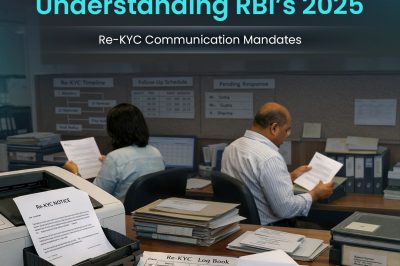
Understanding RBI’s 2025 Re-KYC Communication Mandates
Re-KYC has become a recurring operational and compliance obligation for regulated entities in India. As customer profiles age, documents expire, and risk classifications change, regulators expect institutions to periodically revalidate customer information to ensure ongoing compliance with KYC norms. With the RBI KYC Directions (Amendment), 2025, the Reserve Bank of India has introduced greater clarity—and…
-

Financial Fraud Detection: A Complete Guide for Modern Businesses
Financial fraud rarely announces itself. It slips in quietly — through a fake document, a compromised account, or a transaction that looks ordinary at first glance. By the time it’s noticed, the damage is often already done. For businesses handling money, credit, or financial data, fraud is no longer an occasional incident. It’s a persistent…
-

Give Scammers No Room This Christmas Season with DeepSight
The holiday season is meant for warmth, celebration, and trust. Unfortunately, for businesses—especially in BFSI, lending, fintech, and digital commerce—Christmas also marks the start of something far less festive: a sharp rise in fraud. Every year, as customer activity spikes, onboarding accelerates, and teams push to close the year strong, scammers quietly step into the…
-

Why Early Detection Is the Most Effective Defense Against Deepfake Attacks
A few years ago, deepfakes were a novelty. Something you’d see in internet memes or experimental AI demos. Today, they’ve crossed a dangerous line — from entertainment into enterprise risk. A CFO authorises a payment over a video call.A hiring manager clears a candidate after a “live” interview.A bank approves a high-value account change after…
-

Top 11 KYC API Providers in India
If you rewound the clock 10 years, customer onboarding in India was slow, paperwork-heavy, and painfully manual. Banks relied on in-person document checks, telecom operators stood in long queues with your photocopies, and digital onboarding was still a distant dream. Then came a silent revolution — KYC APIs. These APIs now sit at the centre…
-

The Future of Video KYC: Agentless and Automated
Identity verification has always been one of the most essential steps in onboarding customers—whether you’re opening a bank account, taking a small loan, signing up on an investment platform, or accessing regulated digital services. And for years, this process depended heavily on in-person visits, manual review, and long waiting periods. Video KYC was the first…
-

What is a Tax Identification Number (TIN)? The Ultimate Guide
If you’ve ever filled out a business registration form, applied for GST, opened a current account, or tried onboarding as a seller on an e-commerce platform, one term always appears—TIN, or Tax Identification Number. For something so common, TIN is surprisingly misunderstood. Many people still confuse it with GSTIN, PAN, VAT numbers, and state-level registration…
-

Generative AI for Fraud Detection: The New Guardrails of Digital Trust
Fraud today doesn’t look like it did five years ago. People don’t walk into banks with fake documents. Fraud happens silently — behind screens, inside data streams, and often long before a human can flag anything suspicious. As digital transactions scale into billions each day, fraud detection has become a real-time battle. And this is…