
-
Merchant Onboarding: A Complete Guide to KYC, Risk Management & Payouts
Merchant onboarding is a critical step in building a trusted digital payments ecosystem. For banks, payment aggregators, payment gateways and merchant acquiring businesses, onboarding a merchant involves much more than collecting documents and activating a payment account. Businesses need to establish merchant identity, validate business credentials, assess potential risks and ensure that onboarding processes meet…
-
Video PD for Loans: Faster Borrower Assessment and Underwriting
A loan application can contain financial statements, identity documents, bank records and other supporting information. Yet, for many lending decisions, there is still a need to speak directly with the borrower. This conversation can help lenders understand the purpose of the loan, clarify information in the application and develop a better picture of the borrower’s…
-
Online Address Verification: A Faster, Remote Approach to Customer Onboarding
An address may seem like a straightforward detail to verify during customer onboarding. In practice, it can become one of the most time-consuming steps, particularly for banks, NBFCs, fintech companies and other businesses that rely on physical address verification. A field agent may need to visit the customer’s residence, coordinate a suitable time, collect evidence…
-

7 Ways to Reduce Video KYC Drop-Off
There’s a strange pattern most teams notice after launching video KYC. Users sign up. They fill forms. They upload documents. Everything looks smooth—until video KYC begins. That’s where intent drops, hesitation kicks in, and a chunk of users quietly disappear. If you’ve been trying to reduce video KYC drop-off, you’re not alone. The challenge isn’t…
-
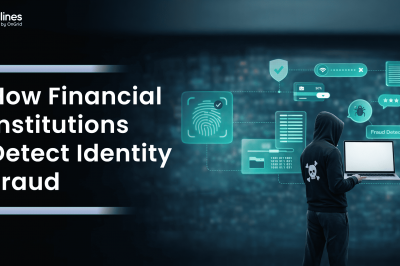
How Financial Institutions Detect Identity Fraud
Every day, somewhere in India, a loan gets approved for someone who doesn’t exist. Not in the way you’d imagine — no elaborate heist, no stolen briefcase. Just a carefully assembled set of documents: a PAN card from one person, an Aadhaar with a tweaked photo, a bank statement edited in a free PDF tool…
-
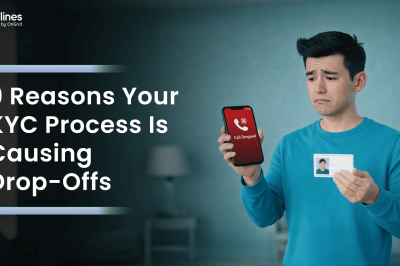
9 Reasons Your KYC Process Is Causing Drop-Offs you know
You don’t usually get direct feedback on a broken KYC flow. No one writes in saying, “Your verification steps are too long.”No one complains that your document upload failed twice. They just drop off. And slowly, quietly, your funnel starts showing signs of high onboarding abandonment—even when everything above it (ads, traffic, sign-ups) seems to…
-
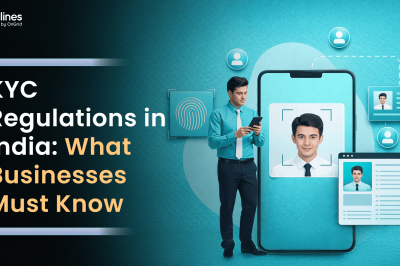
KYC Regulations in India: What Businesses Must Know
You can usually tell how a company thinks about KYC by watching its onboarding flow. If it feels like a form you just have to “get through,” chances are the company treats KYC as a compliance burden. Something to finish quickly so the “real” business can begin. But that mindset doesn’t hold up anymore—especially in…
-

What Regulators Expect from Onboarding in 2026
For a long time, onboarding was treated as a checkpoint. Collect documents. Run a few verifications. Store the records. Move on. Compliance was something you completed at the start of the relationship. That model doesn’t really hold anymore. If you look at how regulatory expectations have been evolving, one thing becomes clear: onboarding is no…
-

What Fragmented Customer Data Is Costing Your Risk Team
Most risk teams don’t have a data problem. They have a data fragmentation problem. On paper, everything looks covered. You have identity data, transaction data, device data, bureau data, maybe even behavioral signals layered in. Each system does its job. Each check passes. Each report looks complete. And yet, something still feels off. Fraud slips…
-

What 1 Billion+ Verifications Taught Us About User Behavior
If you spend enough time looking at user data, a strange thing happens. You stop seeing “users.” You start seeing patterns. Not in a cold, analytical way—but in a way that feels oddly human. Predictable in places, chaotic in others. Consistent until it suddenly isn’t. Now imagine observing this not across thousands or even millions…
-
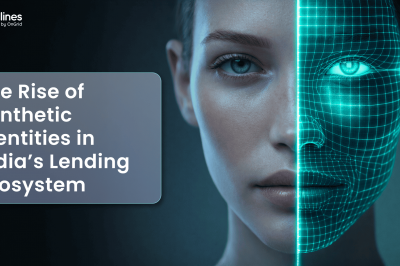
The Rise of Synthetic Identities in India’s Lending Ecosystem
There was a time when fraud in lending looked obvious. Fake documents. Mismatched details. Profiles that didn’t quite add up.You could spot it if you looked closely enough. That time is gone. What lenders in India are increasingly dealing with today is something far more subtle—synthetic identities. Not entirely fake. Not entirely real. Just real…
-

From Mobile Number to Risk Signal: What You Can Really Infer
A mobile number looks like the simplest piece of data in your entire stack. Ten digits. Easy to collect, easy to verify—at least on the surface. But in reality, it’s often the first—and sometimes the most revealing—signal you get about a user. Especially in India, where a mobile number isn’t just a contact detail. It…
-

RBI Video KYC Guidelines in India: Process & Compliance Explained
In late 2022, the Reserve Bank of India quietly changed the way millions of Indians could verify their identities for financial products. What was once a long queue at a bank branch, a fat file of photocopies, and endless waiting suddenly had a digital alternative — Video KYC. By 2026, this shift has grown from…